
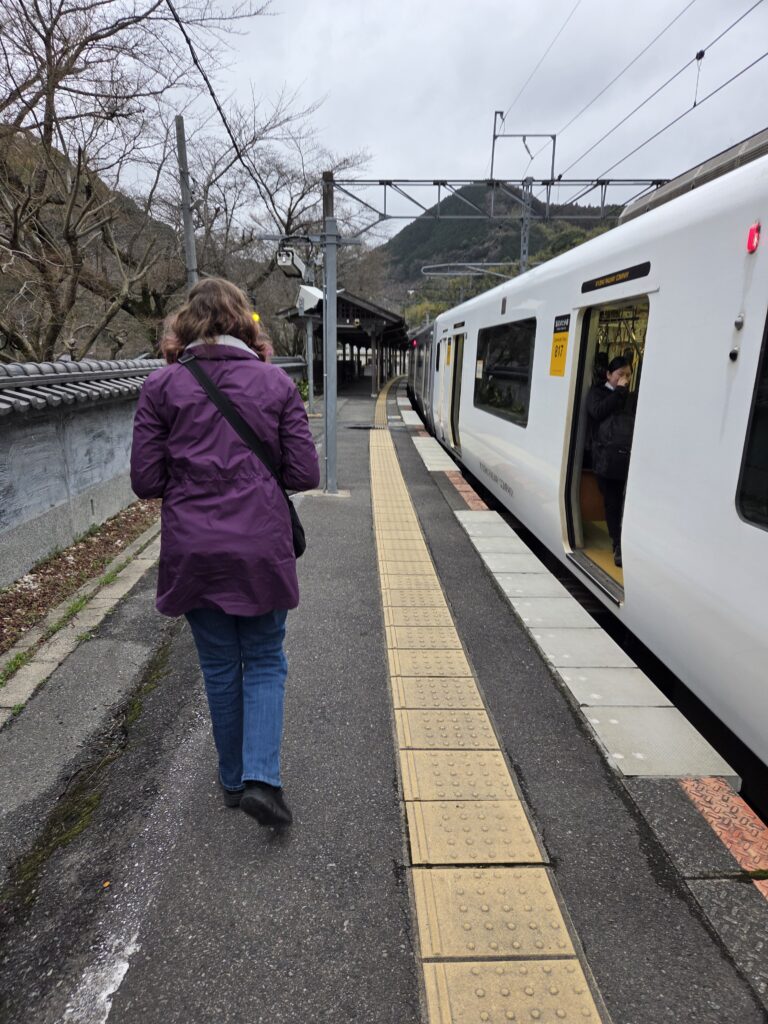
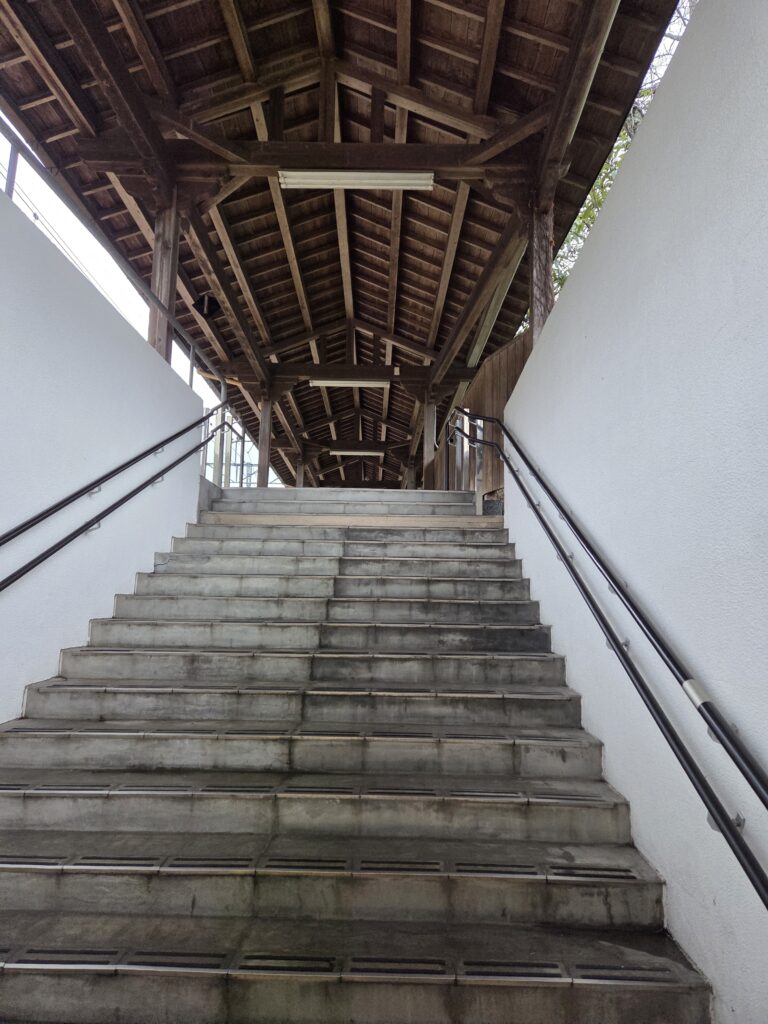
We went to a really out-of-the-way train station, but the temple we wanted to visit was closed for the day already. It was super quiet, and the station building was beautifully constructed with timber framing.
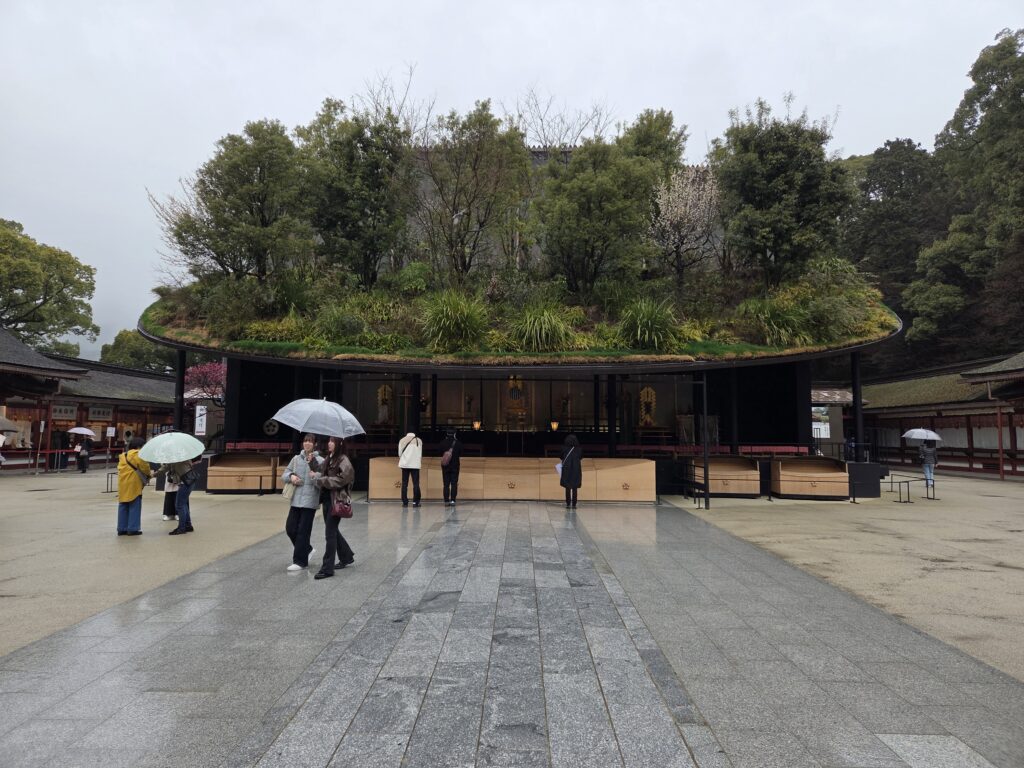
The main shrine building at Dazaifu Tenmangu shrine is being rebuilt. So they set up this temporary shrine for now. Notice the green roof – feels like Pacific Northwest character!
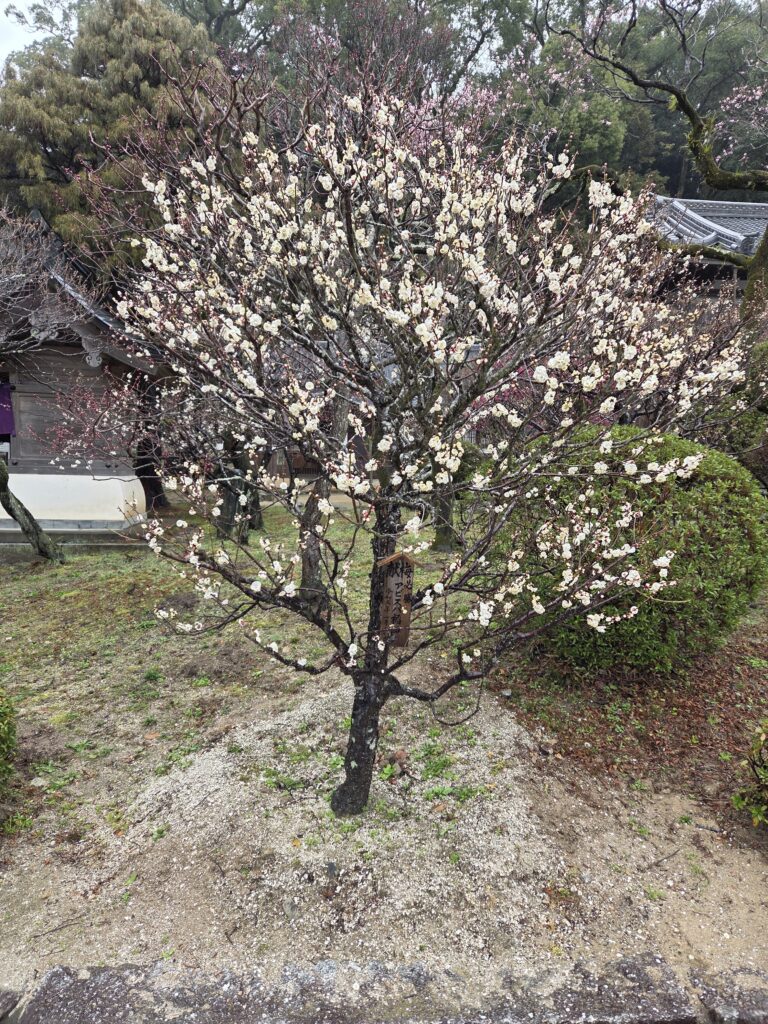
The man who is enshrined here loved plum blossoms, which were just blooming when we visited.
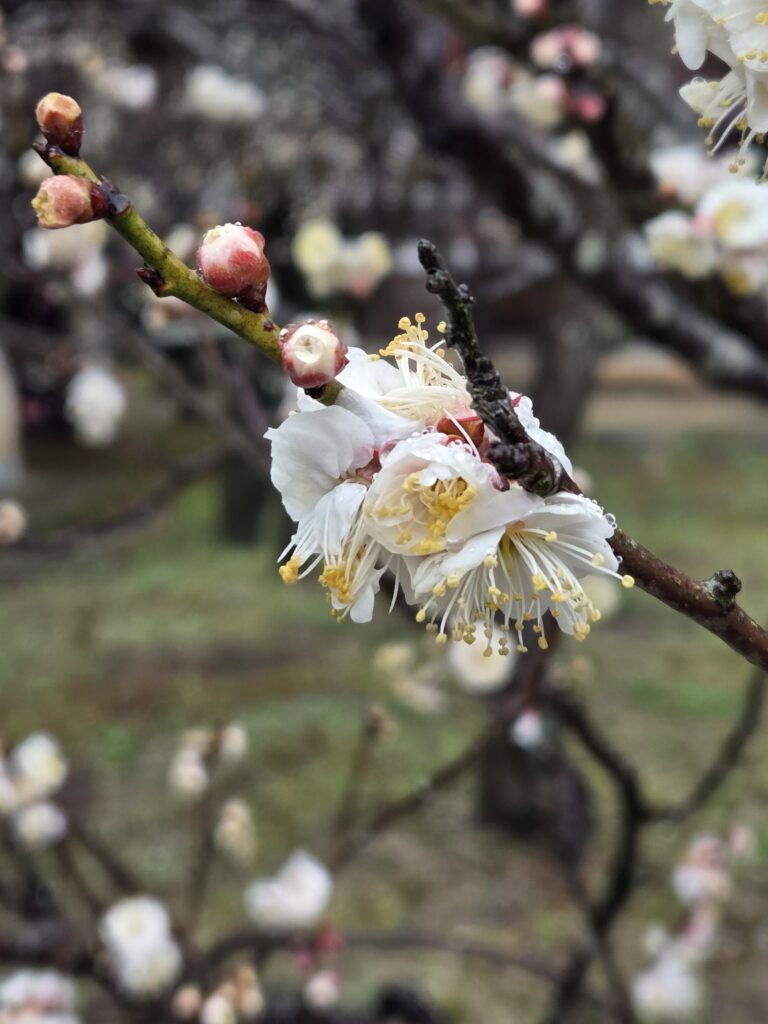
A closeup of the plum blossom.
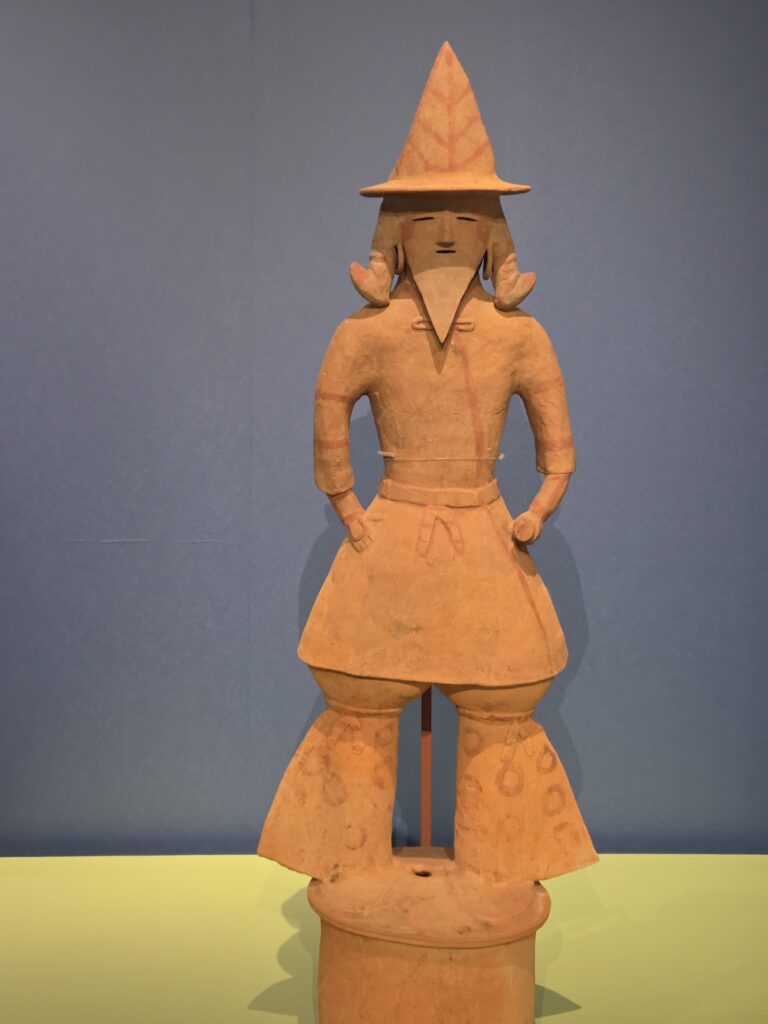
The Kyushu National Museum is huge, and specializes in their regional ancient history. These clay “haniwa” figures are about 1500 years old!
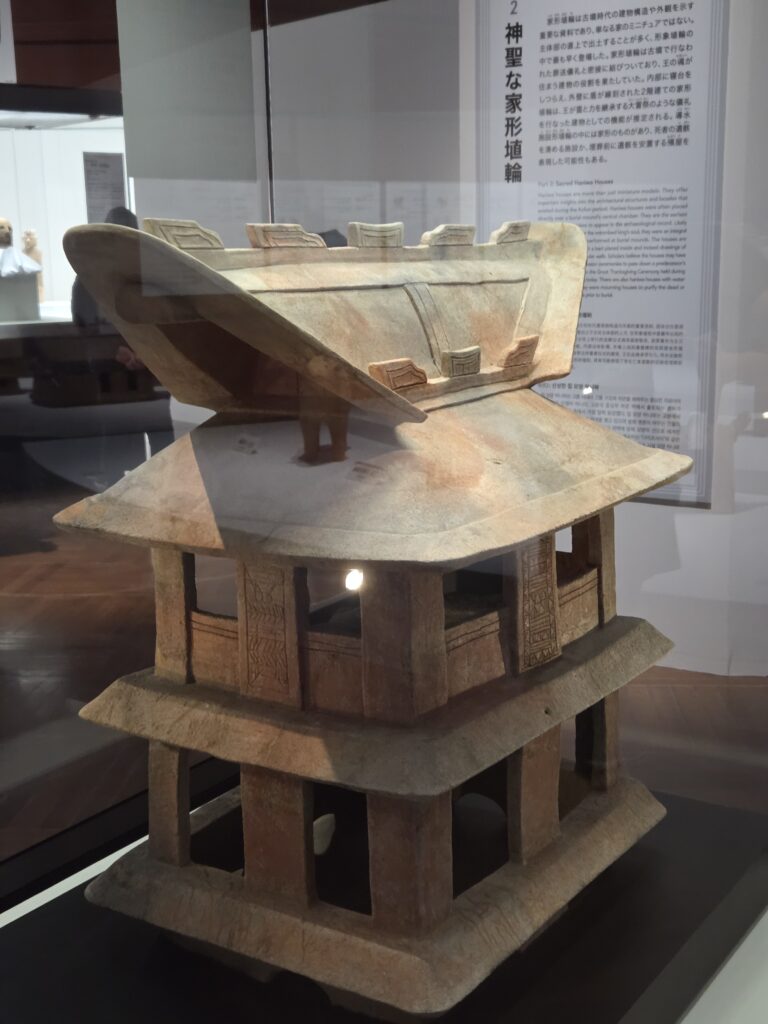
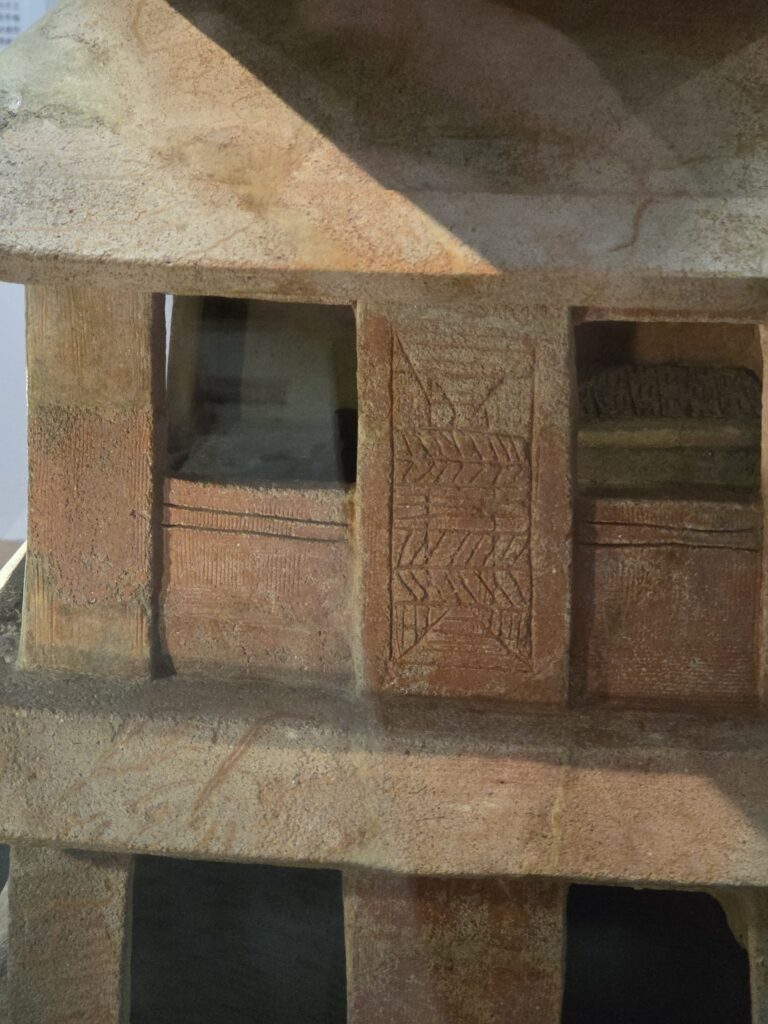
Haniwa are mostly humans, but some are animals, and a few are buildings.
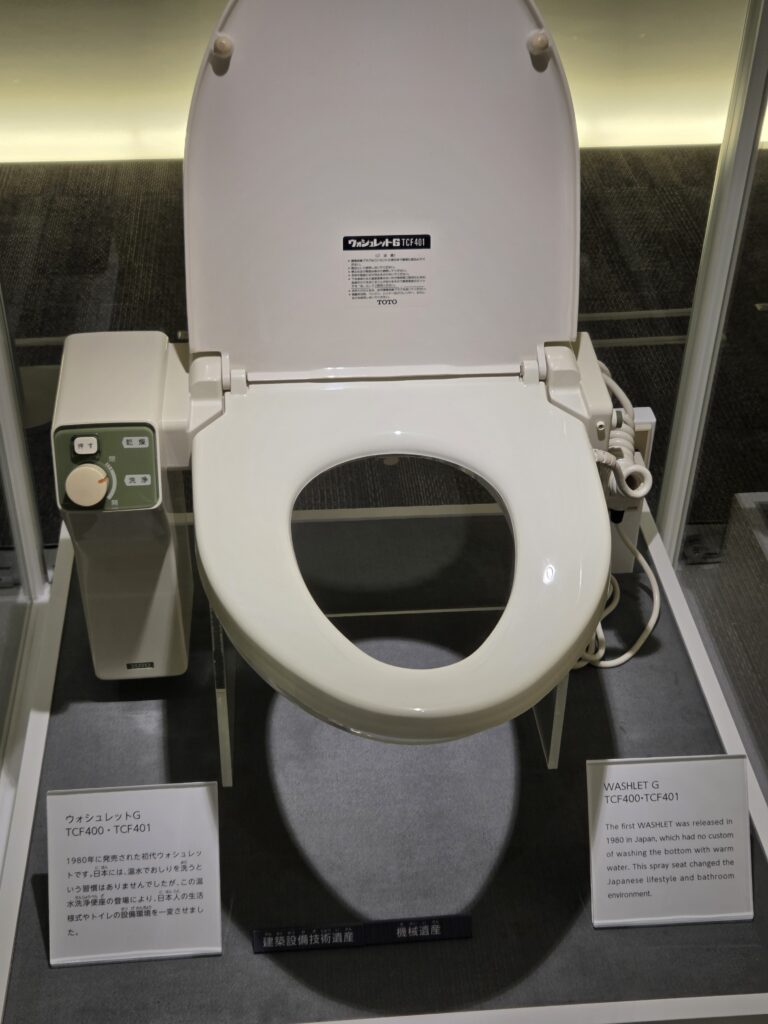
The next day, we visited the company museum of Toto – the toilet makers!
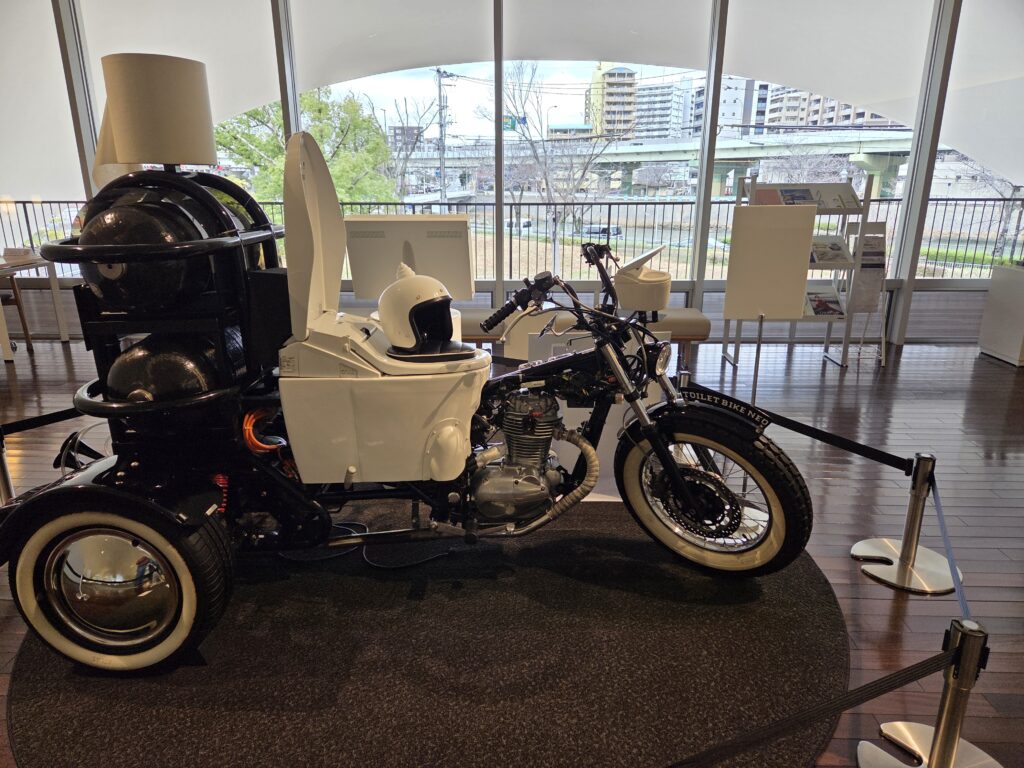
It was chosen mostly because we were in the area for some shopping, but I’m so glad we did. Some years back they made a motorcycle powered by human waste biomass (y’know – poop), and drove it around the country for publicity.
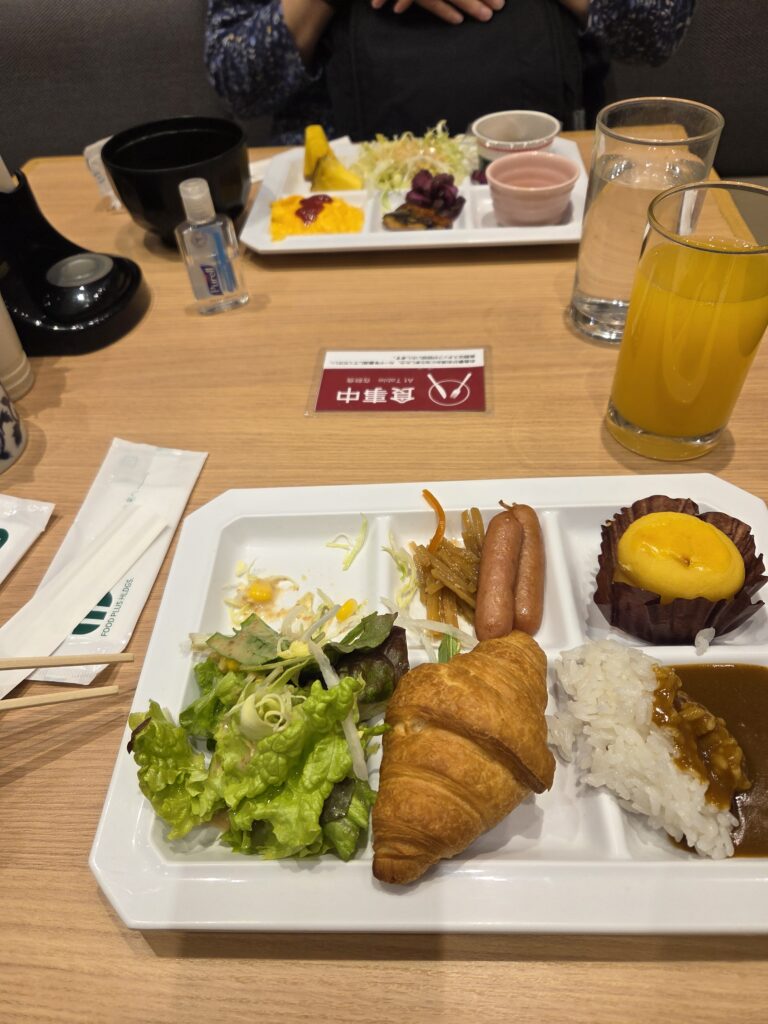
The breakfast buffet at the hotel was really nice. Both Japanese and western options were available.
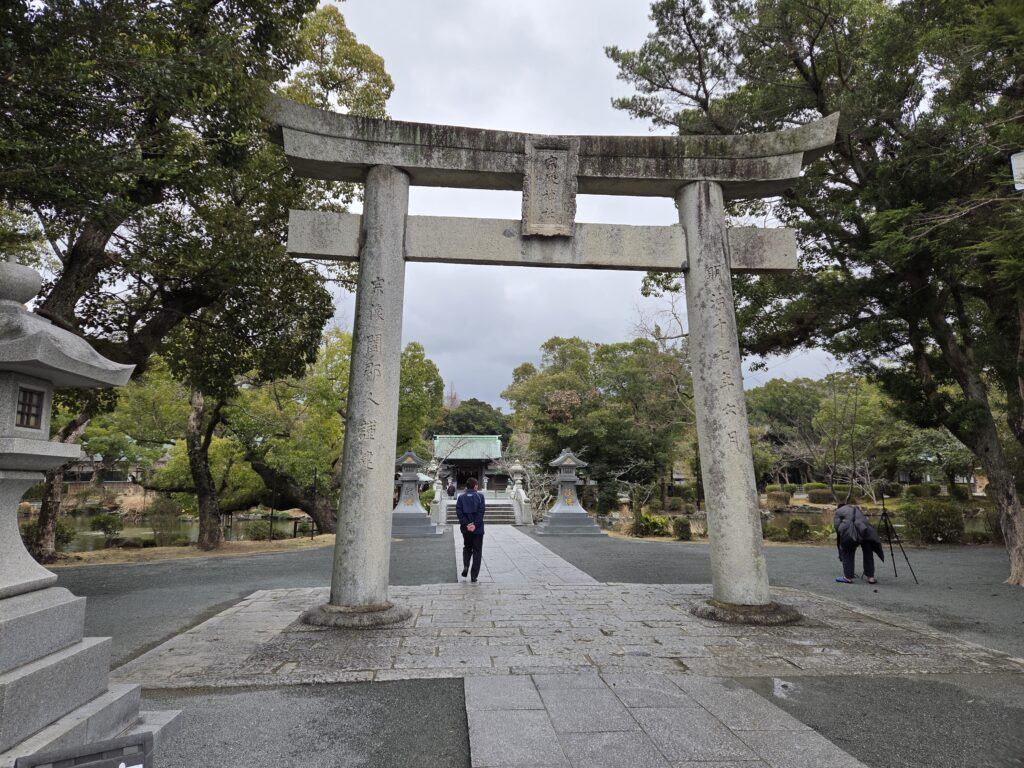
The next day we went to see Munakata Taisha shrine. It took some work getting there, but it was really interesting. There are three smaller shrines that make up the complex – one on Kyushu, another on a smaller island just offshore, and the third on a tiny island way out. The last can only be accessed by clergy, so we just saw the other two.
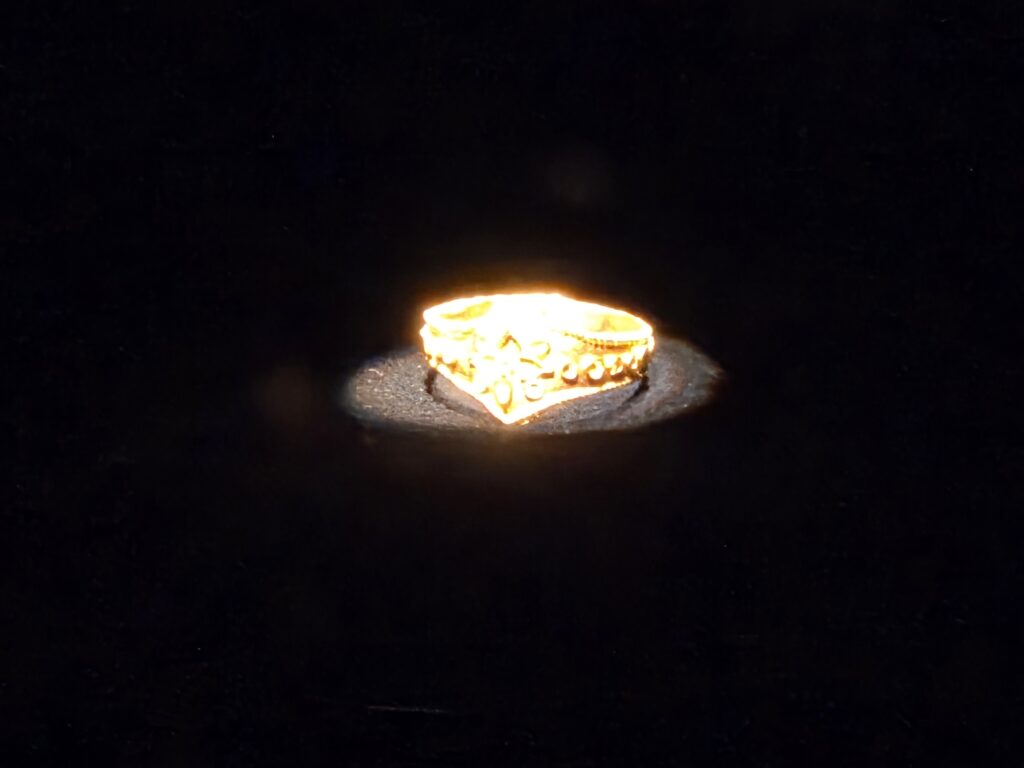
The shrine’s museum, however, featured the results of archaeological excavations on the smallest island, featuring artifacts from the last 1000+ years. This is a small gold ring.
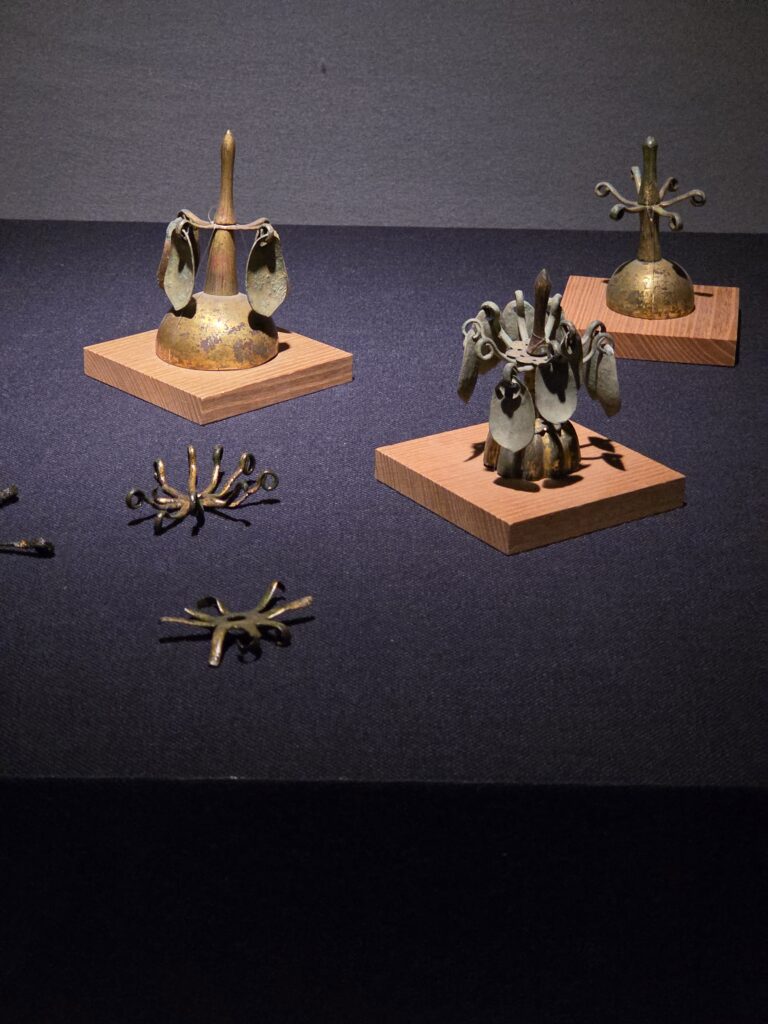
The quality of artifacts left at the island speaks to the power and influence of the local kingdom back then. Lots of finely worked gold, silver and bronze from as far back as the 6th century.
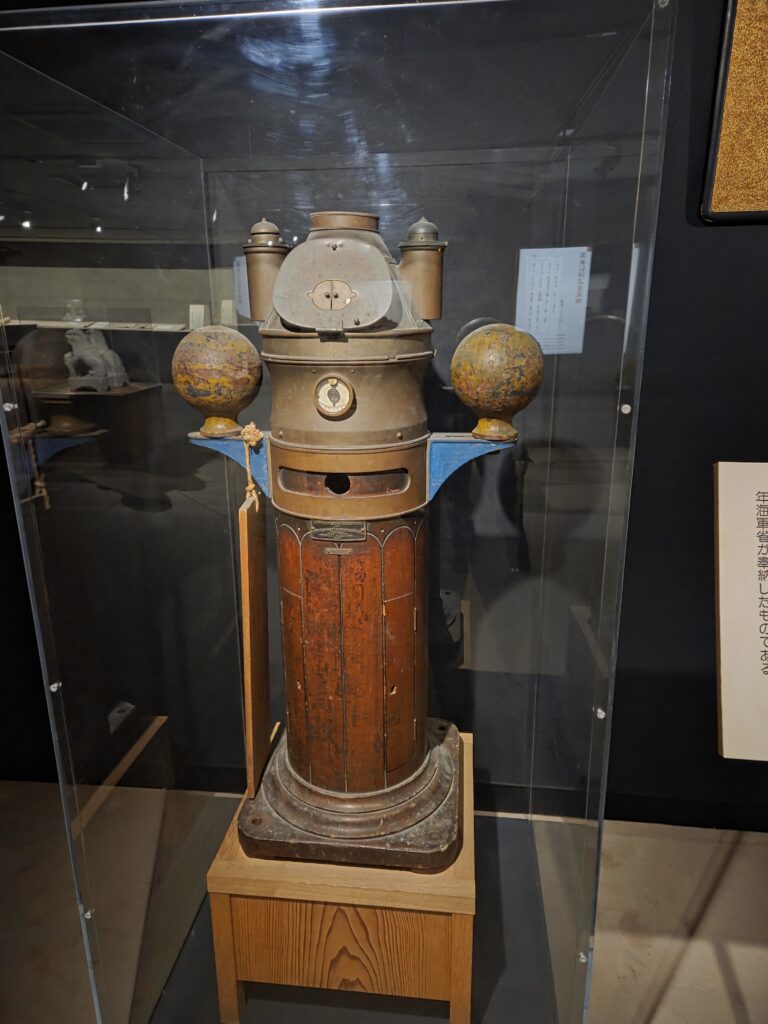
Amongst the ancient and medieval artifacts is the ship’s chronometer from the Japanese battleship Mikasa. It was donated by the fleet’s admiral after their victory over the Russians at the battle of Tsushima in 1905.
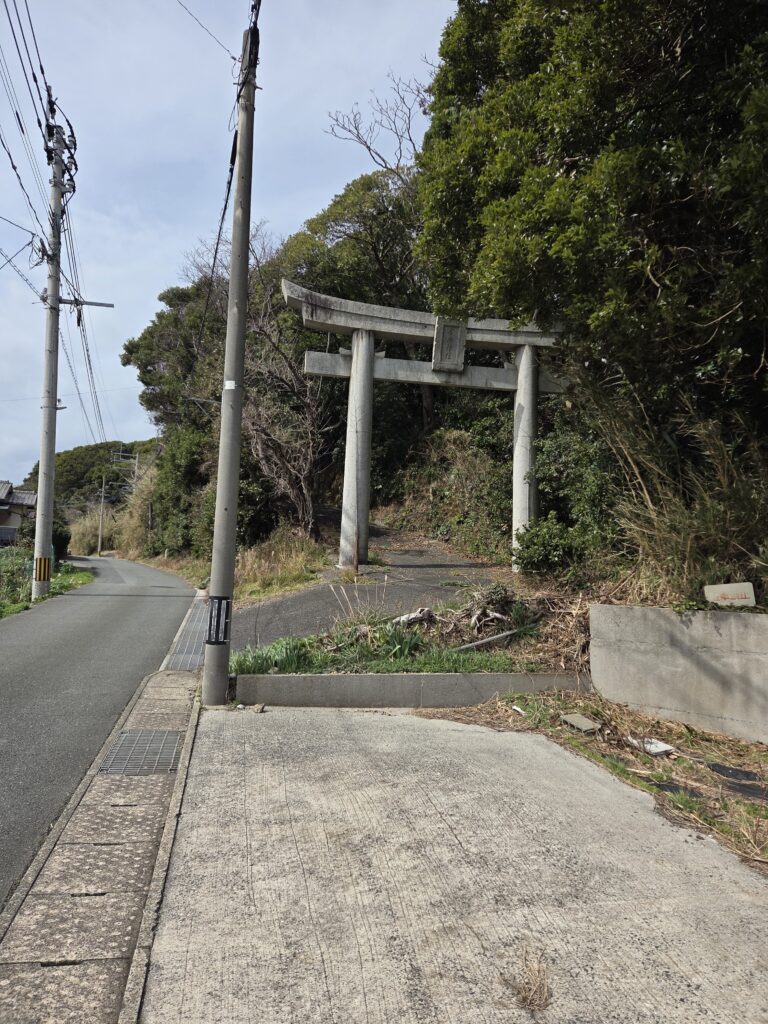
On our way to the ferry to visit the second shrine, we tried to make a side trip to visit another nearby shrine, but the road was closed.
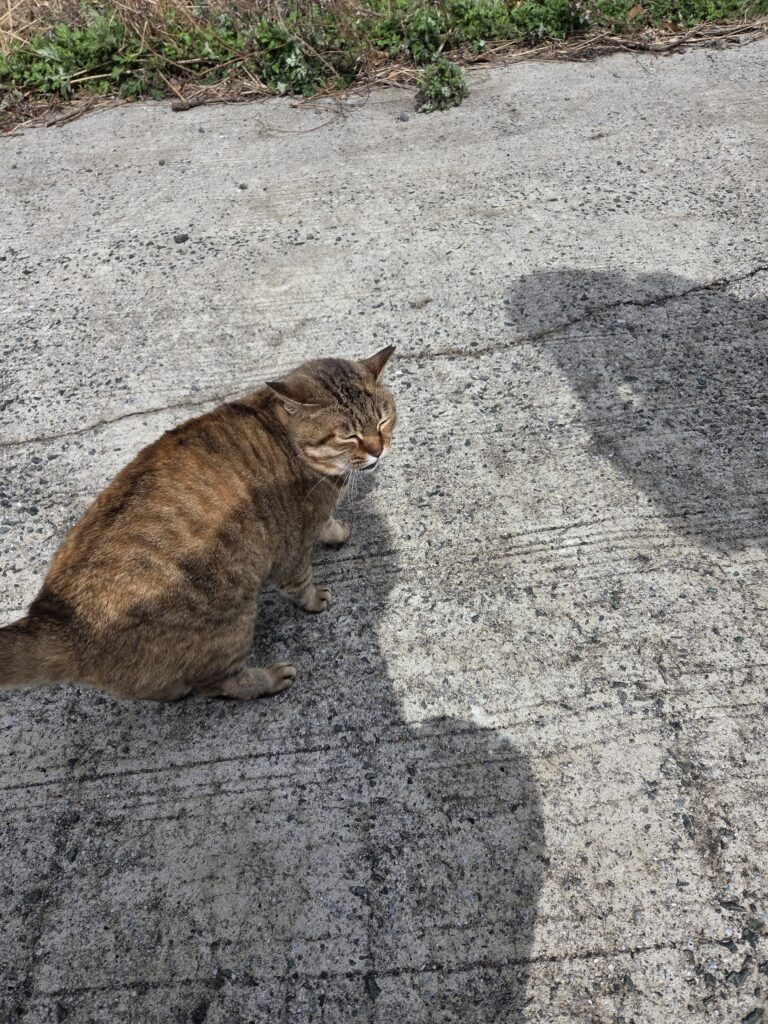
A cat came out of a nearby yard, yelling as he ran over. He insisted on sniffing us up before we were permitted to pass through his territory. He was very friendly!
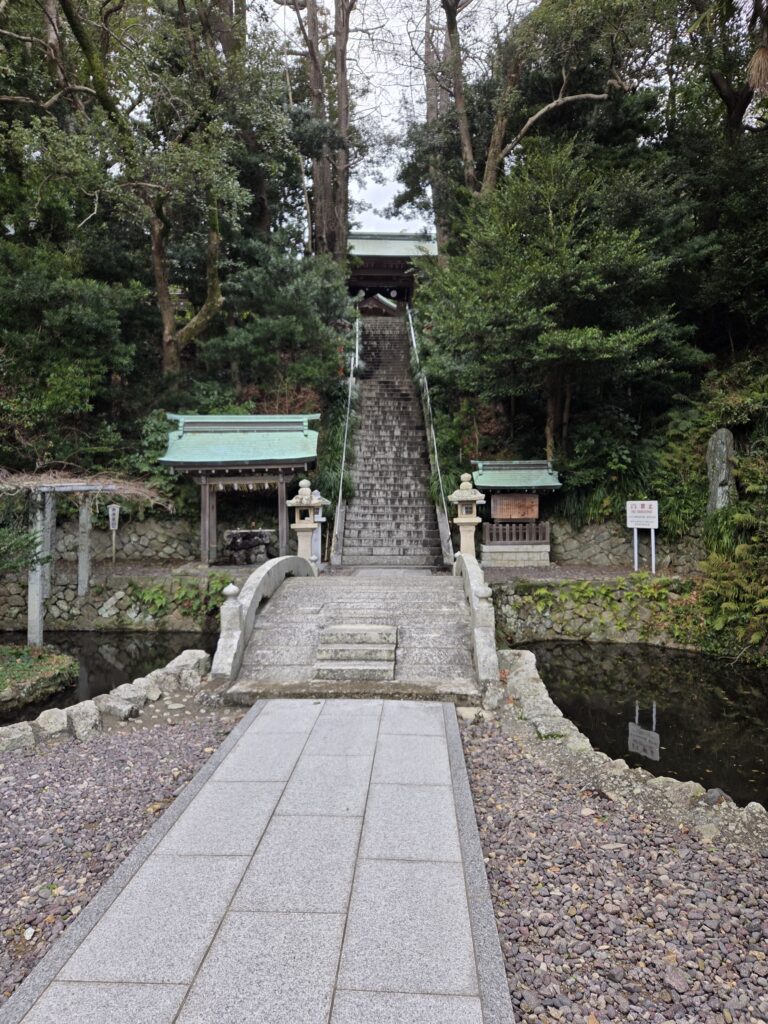
The second shrine on Oshima was much smaller, and at the top of a lot of stairs. We paid our respects, then ran back to (just barely) catch the next ferry back to Kyushu.
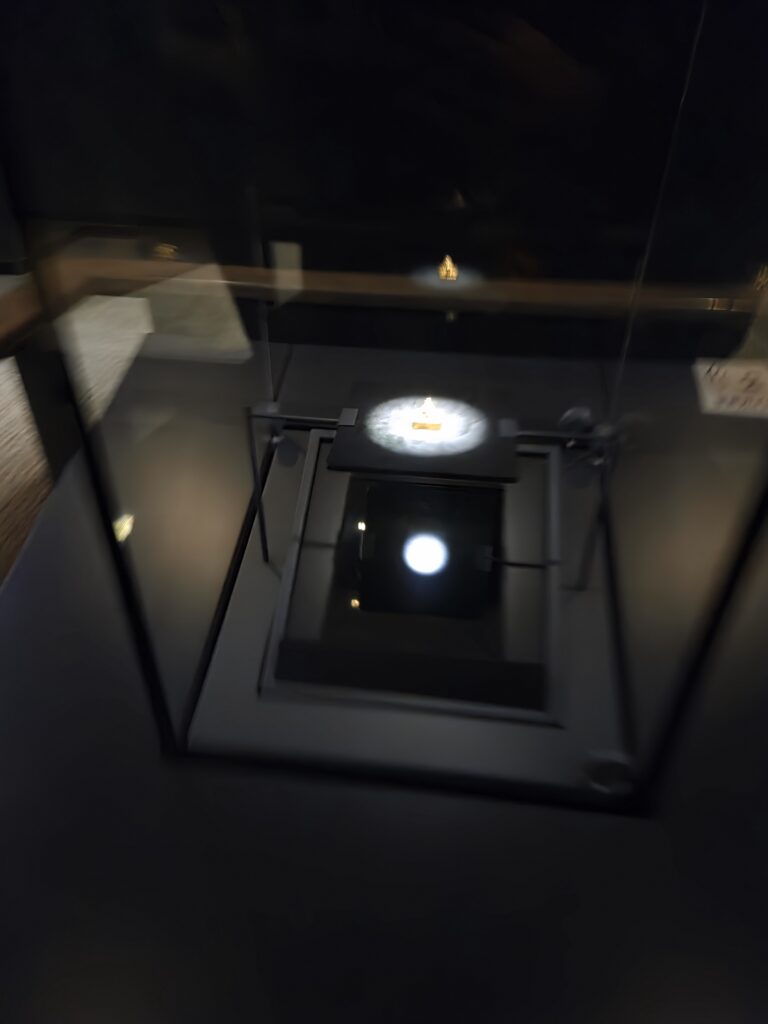
This picture is terrible, but I couldn’t manage better. The next day we visited the Fukuoka City Museum. It was a must-see for me, due to this specific artifact, the seal of the King of Na. It’s a small gold seal, about 1″ cube overall, 95% pure gold.
It dates to the 5th century, and there are records (in China) of it being given to the local king by the Han emperor of China. It was lost until 1784, when a farmer stumbled across it while repairing an irrigation ditch!
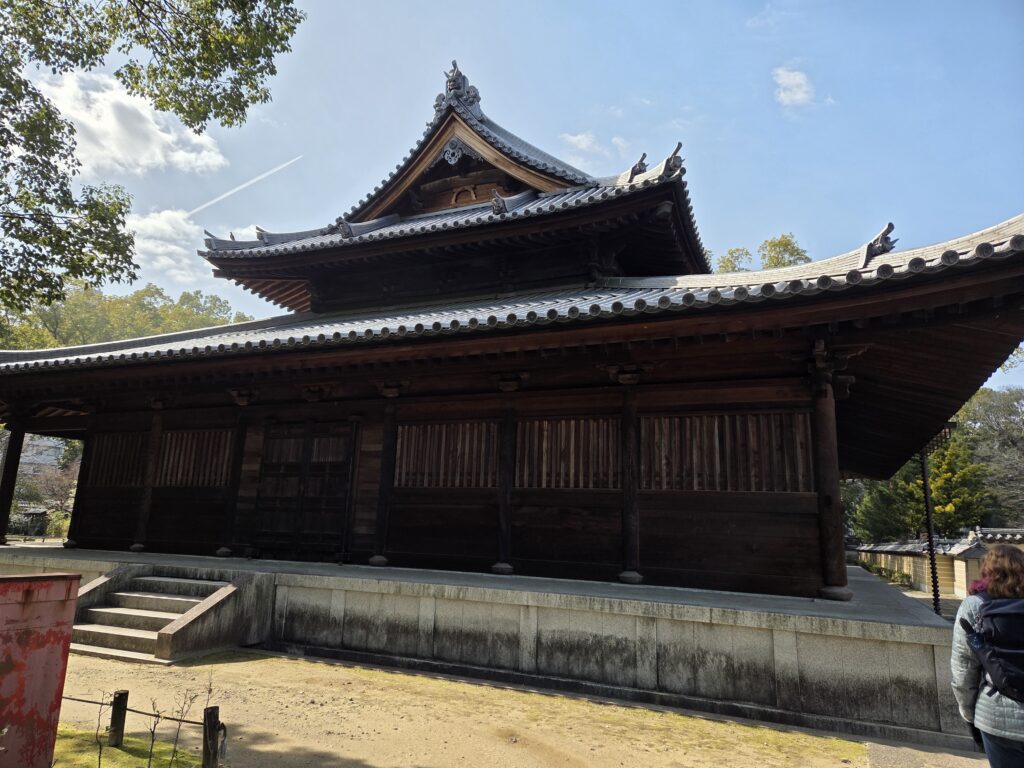
The next day we visited Shofukuji temple.
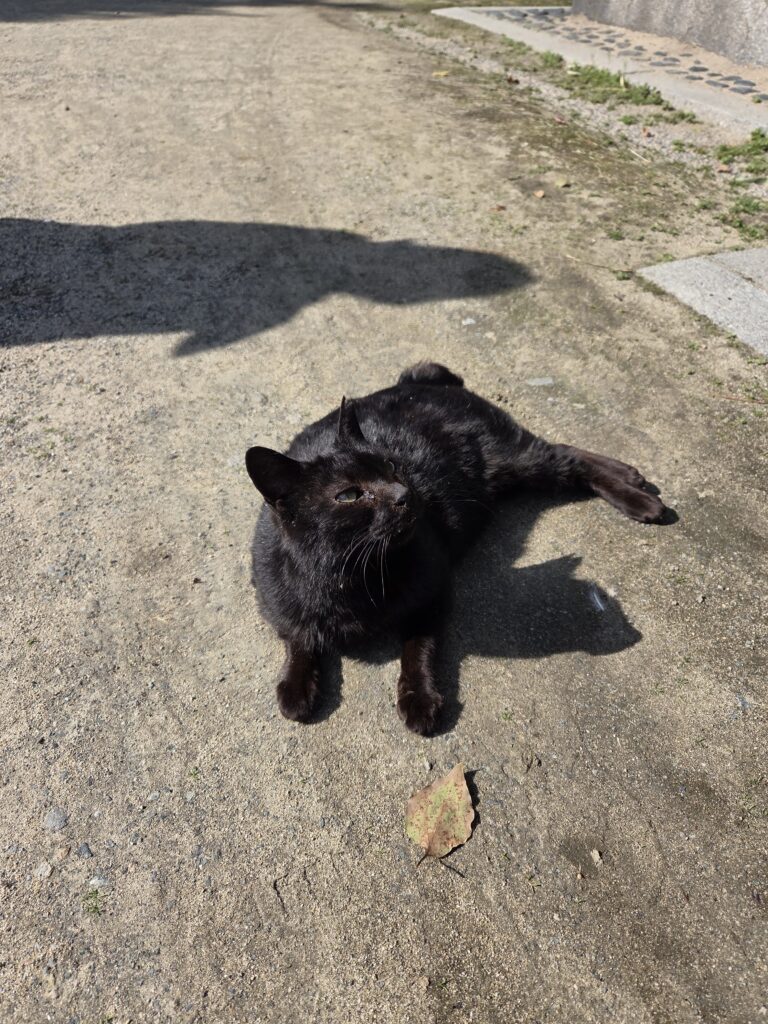
We met a friendly kitty on the grounds.
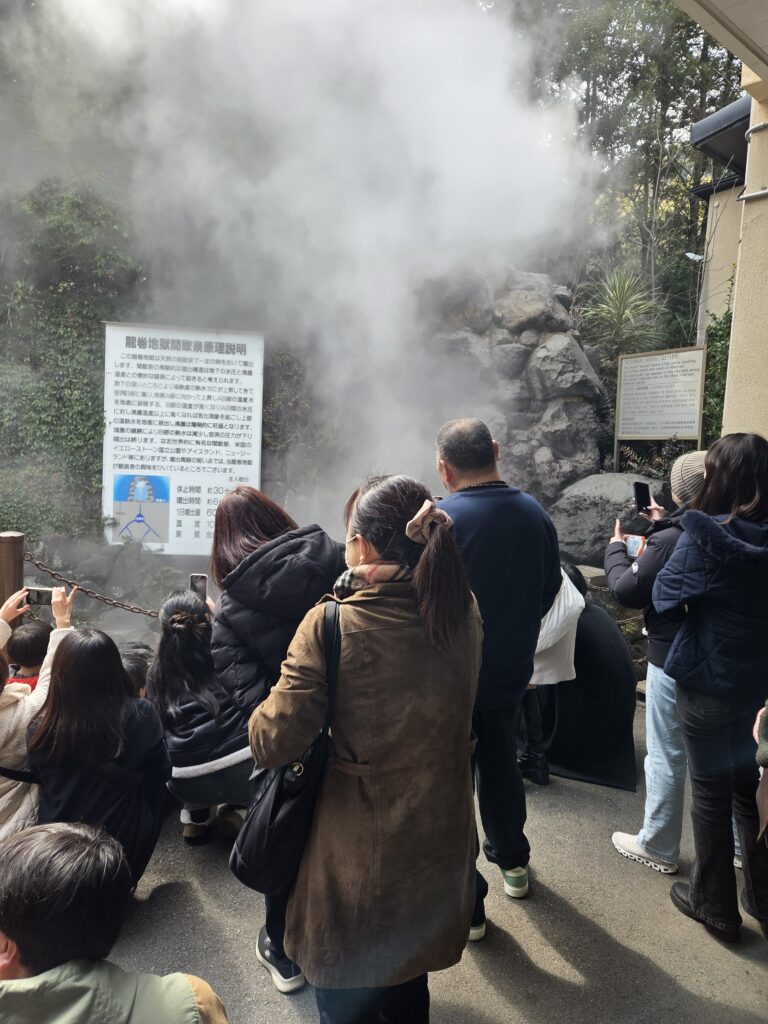
Our last night on Kyushu we went to a hot springs resort town named Beppu. Their prize tourist attraction is a series of “Seven Hells” – each one is a neat hot spring with interesting colors or patterns. The one nearest our hotel was a regularly-firing geyser. It was capped on top, probably so as not to drench the nearby buildings in hot water, which made it less impressive that it could have been. Not the packed crowd!
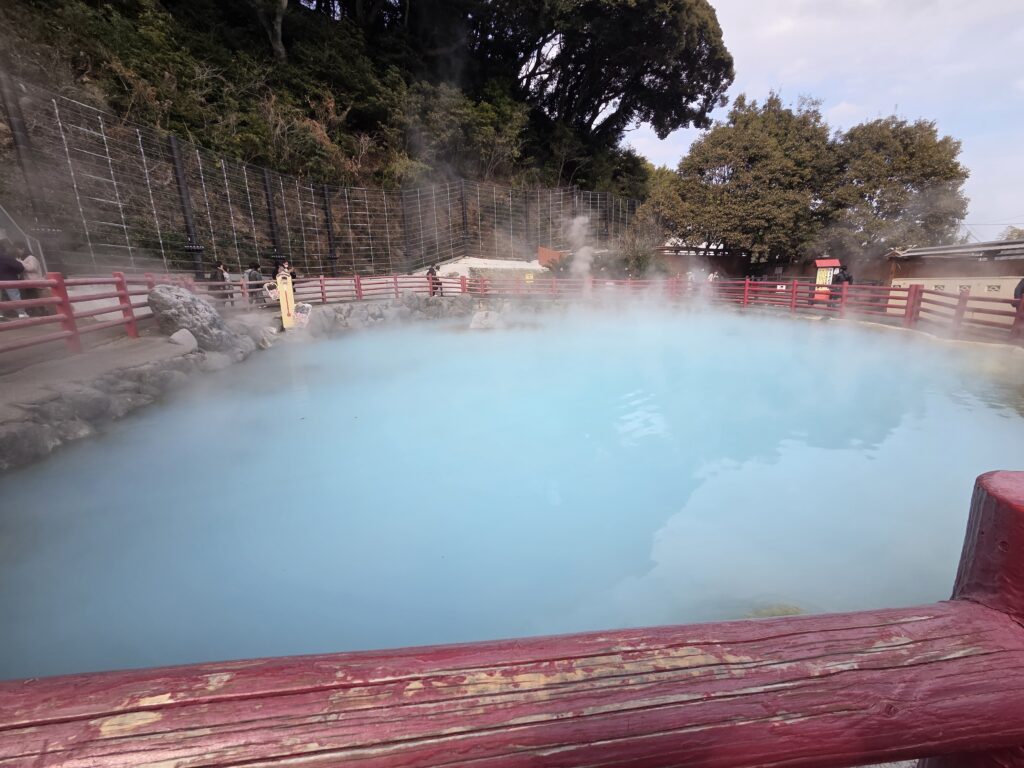
The Ocean Hell is a striking blue color!
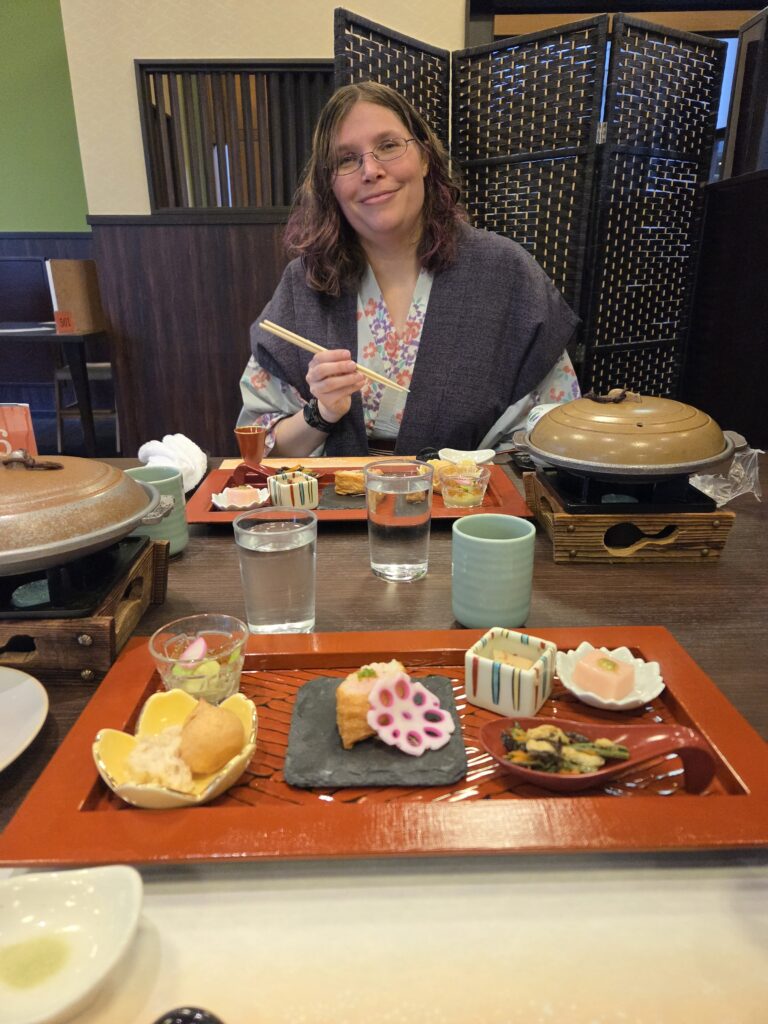
We had a wonderful multi-course “kaiseki” dinner at our hotel. It had an indoor/outdoor hot spring bath on site.
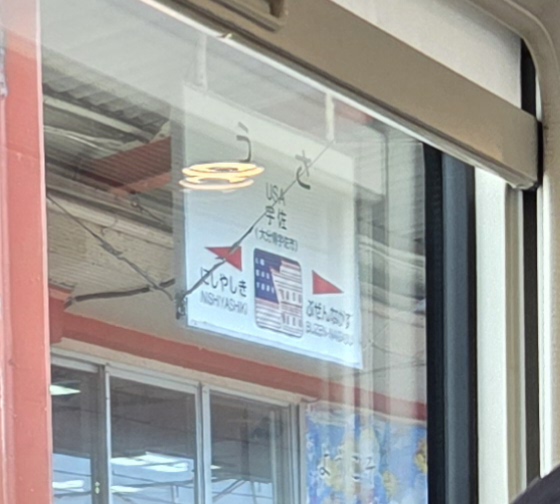
We passed through the town of Usa, Japan on the train out of Beppu. They used to have a lot of manufacturing there so that stuff could be labelled “Made in Usa”.
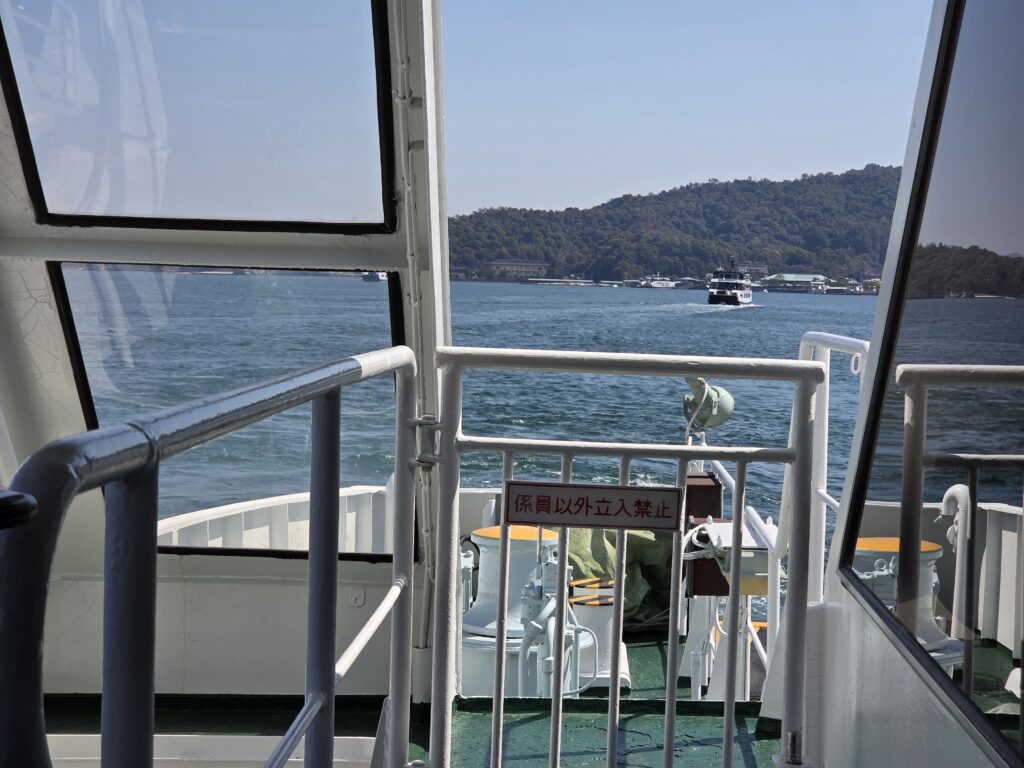
In Hiroshima Bay, the island of Miyajima, or “shrine island” has two passenger ferries leaving every 4 minutes! It’s very pretty, but now wildly overcrowded. It didn’t feel like the same place I visited in high school, and I wish we’d skipped it.
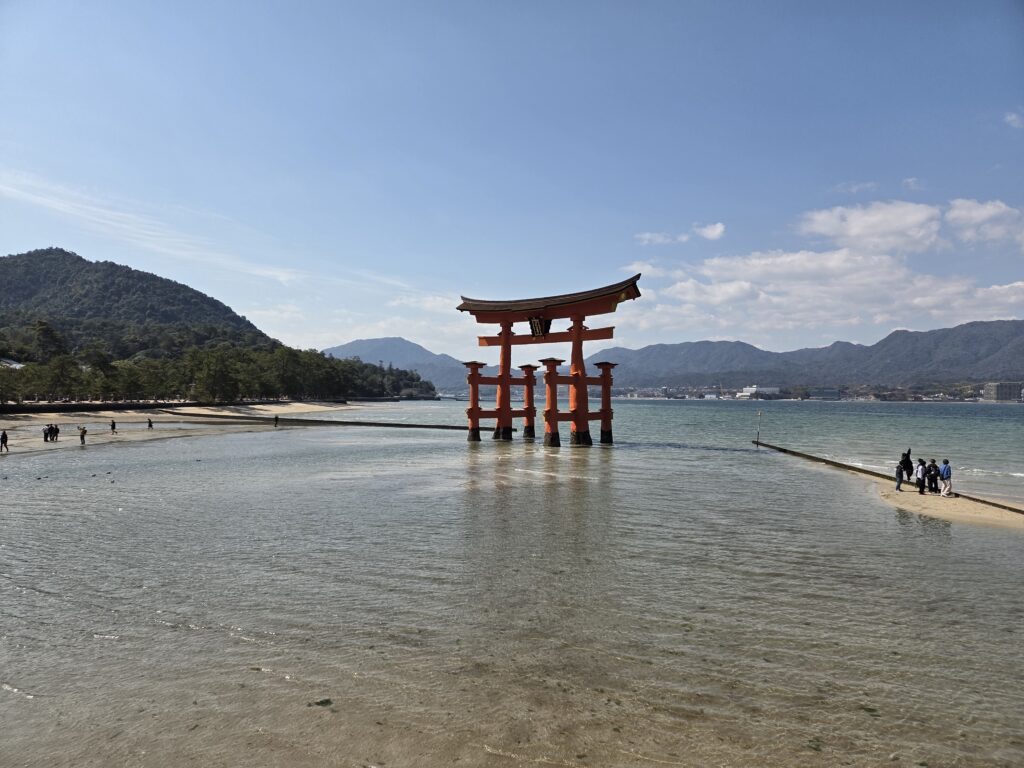
The famous “floating torii gate” is still very pretty.
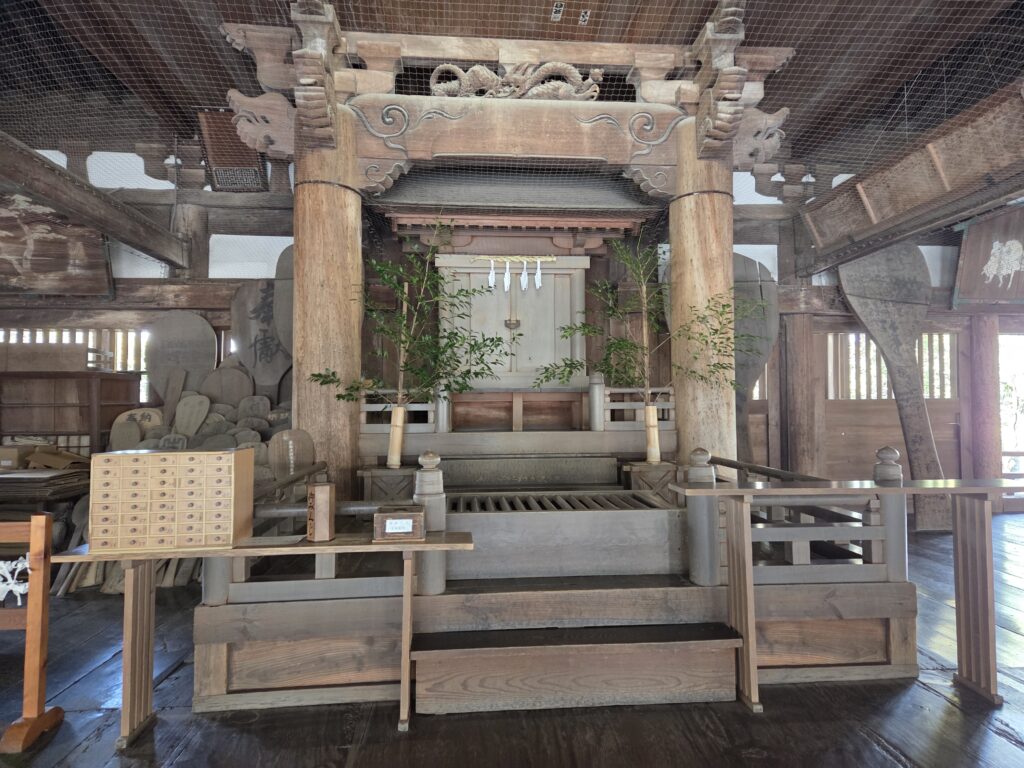
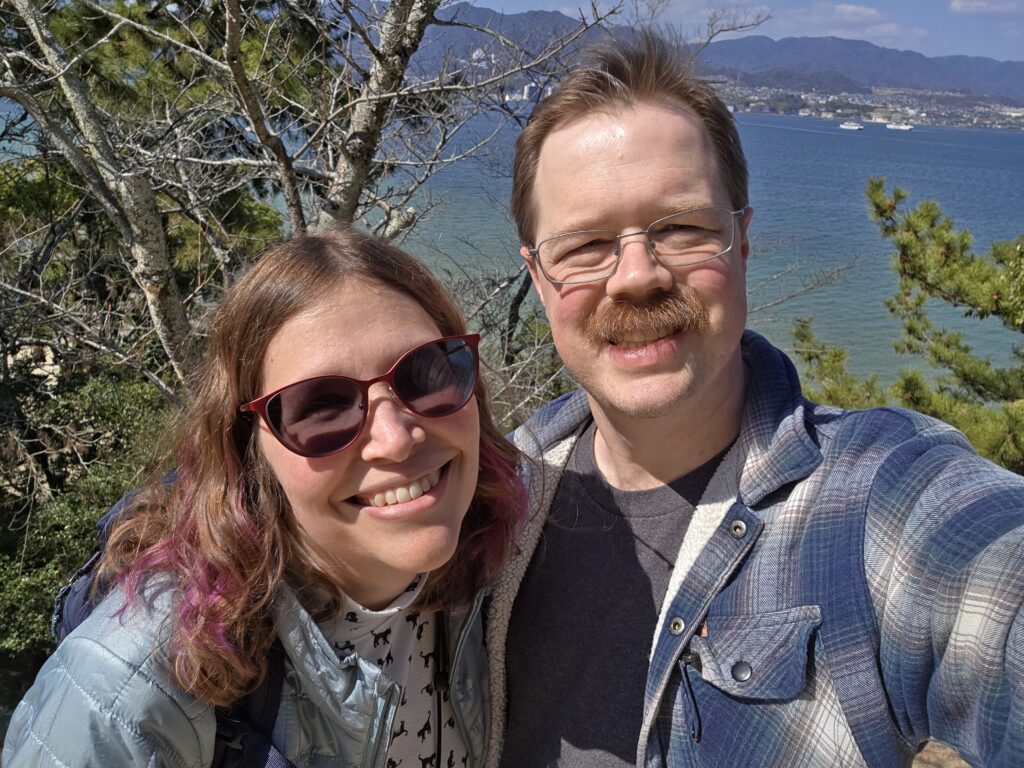
We found a small temple up the hill that was pretty neat, and gave us a nice view of the island and bay.
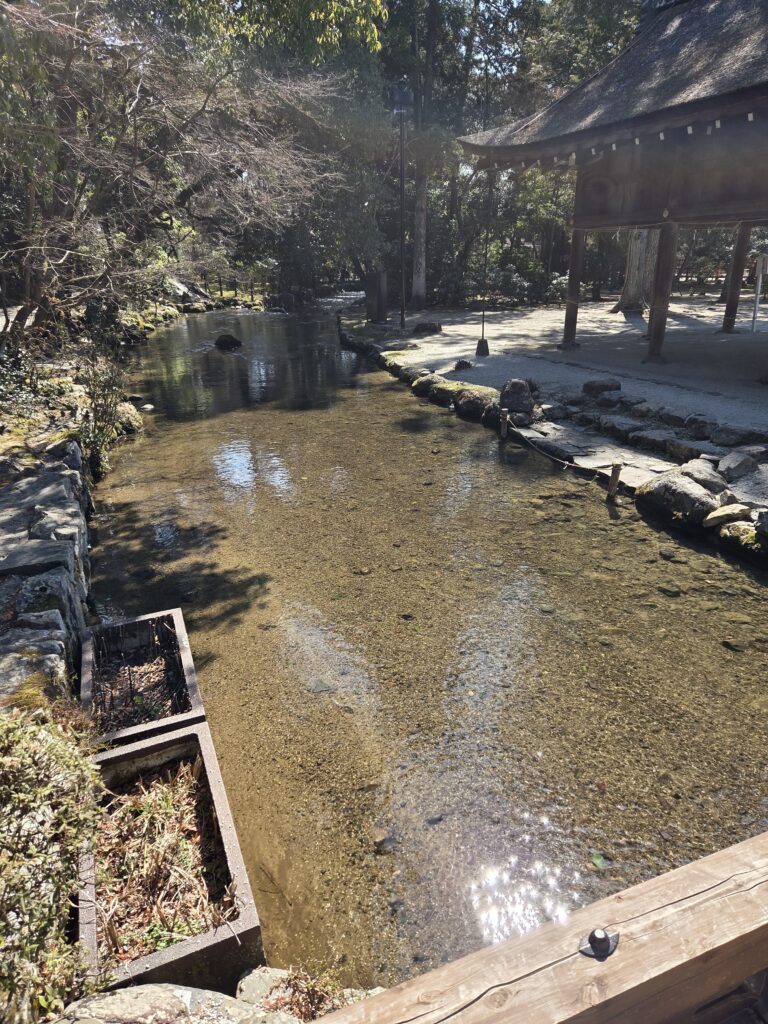
Back in Kyoto, we visited Kamigamo Shrine, which is nearly 2000 years old! The river here passes through Shimogamo Shrine, which we visited the previous year.
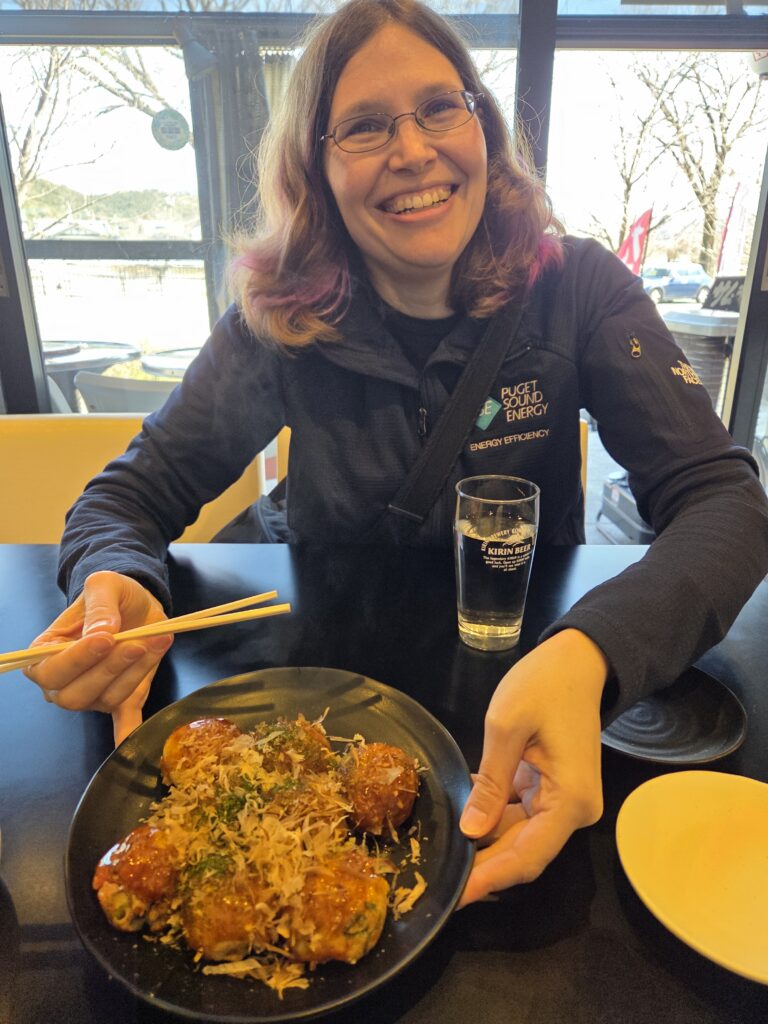
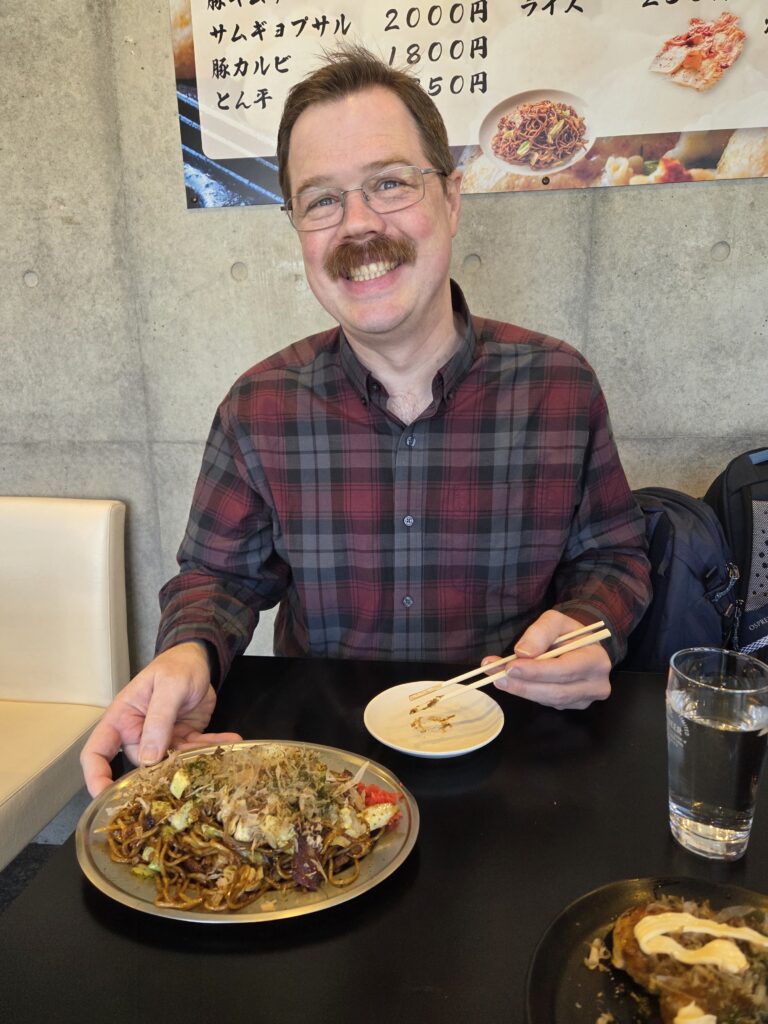
Afterwards we had a light lunch of takoyaki and yakisoba. It was very tasty!
Leave a Reply